
The Activist and the Contemplative
Which way to turn?

In the face of oppressive power you have only a few choices: resist, submit, try to find your own peace. You might do all three at different moments. The first and third are better than submission—although a private peace can be close to submission. Being an activist or a contemplative, well, most great leaders have been both. Harriet Tubman, Mahatma Gandhi, Martin LutherKing, Nelson Mandela, Sojourner Truth, Thich Nhat Hanh.
As a teenager I discovered a quote from Gandhi that disturbed and inspired me equally: Whatever you do in life will be insignificant, but it is very important that you do it.
Oxymoronic. I’ve struggled with that insight my whole life.
Studying and practicing Buddhism leaves me feeling a degree of pointlessness about changing the world. We are too immersed in it, we miss the bigger picture, we blunder in the dark, and in trying to be a “good person” we are weighed down by ego.
The world repeats itself endlessly anyway. And trying to change myself is challenging enough.
A spiritual life asks us to do the right thing, which includes resisting harm.
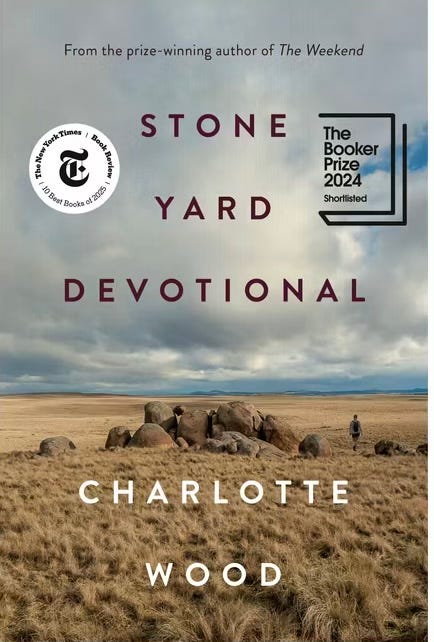
Recently I read Stone Yard Devotional by Charlotte Wood, shortlisted by the Booker. Often I prefer the books that didn’t win that quirky award. An unnamed narrator, an older woman who spent her life as a climate activist, retreats from the world to a small rustic cloister near where she grew up in Australia. There are many quirks to this books as well, and it triggered many reactions in me.
The narrator is the contemplative. Her counterpart is the activist, a famous nun named Helen Parry who spends a period of time at the cloister. A confident and dynamic environmentalist, she also went to elementary school with the narrator, who was once part of a group of girls who bullied her.
The narrator works to find forgiveness both within herself and with Helen Parry. It is a slow work-in-progress: I’m used to it now, the waiting. An incomplete, unhurried emergence of understanding, sitting with questions that are sometimes never answered.
Her angst about climate catastrophe continues in the cloister: During Vigils I am filled with mourning for those butterflies, for all the extinctions and threats, flooded once again with the knowledge that nothing outside these abbey walls is well, and no manner of things shall be well. And I know that inside these walls, Helen Parry is the only one who will face that truth. And I don’t know what my duty is to that knowledge, except to hold it.
There is also a plague of mice, so numerous they infest and destroy parts of the cloister, contaminate the food. This plague was a real one, an environmental disaster that hit Australia in 2021 during the Covid lockdown. The mice force the nuns into moral compromises and the plague seems hopeless—the more mice they kill, the more there are. There are so many mice that a horde of them cross over road and the road looks like it is a wave in motion. The problem is overwhelming and feels hopeless, like environmental work. When the end of the plague finally comes, it’s not through their efforts, but their efforts are necessary anyway.
The narrator considers the paradox of her earlier environmental activism: At every step of my every attempt I have only worsened the destruction, she decides. “Every email, meeting, press release, conference, protest. Every minuscule action after waking means slurping up resources, expelling waste, destroying habitat. … Whereas staying still, suspended in time like these women, does the opposite. They are doing no harm.
With the mice, the nuns do harm. Contradictions and doubt inhabit the spiritual life.
So little is really up to me that pointlessness haunts me, a feeling halfway between letting go with serenity and carrying despair. It tilts both ways, toward one, then the other.
Being active, i.e., attending a protest, a political meeting, a postcard party, a whistle-pack-creation party, undoes feelings of hopelessness, at least sometimes; it comes with the uplift of community, the sharing of fear, sadness, joy. There’s always laughter, often singing. As a spiritual teacher once told me, we drown in deep water without stepping stones. Other people are the stepping stones.
Like the cloister in Stone Yard, activism joins us to others, creates awareness of how many we are, how we all struggle, uplift, have a good time. It is full of its own pleasure, that sense of solidarity.
Afterwards I need a good nap. Our forebears had religious practices; they maintained the spirit as well as resisting tyranny. They probably also took naps.
The resistance in Minnesota is built on compassion plus action, with many poles of initiative and leadership—so many layers of self-organizing that it’s extremely difficult for the government to repress or control them. A crew of carpenters go around fixing kicked-in doors. Tow truck drivers take cars of detained people for free. Unions feed those who can’t leave their houses. Choirs sing on the streets. Faith groups demonstrate together.
There’s no leader to control. No one’s isolated, despairing if they are part of the movement. Pain, grief, pure sadness, yes, but everyone feels the joy of doing something meaningful with other people.
There are lessons here. Groups are powerful. Join a group, start a group, maybe just introduce yourself to a neighbor. United we stand.
Beverly Burch’s most recent book is the novel, What You Don’t Know. She also has four award-winning poetry collections and two nonfiction books. She lives in Oakland, CA. Website: www.beverlyburch.com
Purchase WHAT YOU DON’T KNOW here.

Thanks for reading. And your own thoughts?
I always find your posts so powerful, Beverly! I find this to be true for me, too: "Being active, i.e., attending a protest, a political meeting, a postcard party, a whistle-pack-creation party, undoes feelings of hopelessness, at least sometimes; it comes with the uplift of community, the sharing of fear, sadness, joy. There’s always laughter, often singing. As a spiritual teacher once told me, we drown in deep water without stepping stones. Other people are the stepping stones."
Makes me want to read that book