
Misfitting
Lillian, Julia, Chloe, Olivia, and the rest of us

So many ways to be a misfit—attitude, appearance, physical ability, skills (lack of), opinions, family, sexuality, race, religion—a list with no end because feeling like a misfit is so personal, so varied. Everyone probably hits that point at least once but a crisis of misfitting that alters a life is of a higher degree.

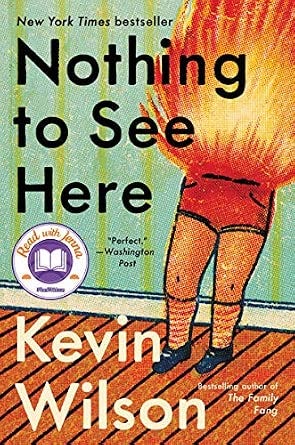
Consider Kevin Wilson’s, Nothing to See Here, a story about twins who burst into flame when they’re upset. (Brilliant metaphor!) Lillian, the young woman hired as their nanny is her own brand of misfit—poor, a scholarship kid at an exclusive private school. As nanny she works for the wealthy family her best friend married into. Yes, she’s her BFF’s employee, and the friend’s becomes unsettled too.
Lillian doesn’t fit in other ways. From that point on, I guess I sort of realized that my imagination, which made life tolerable, needed to be kept a secret from the rest of the world. Her fears and love for these strange children is mixed with delight: For a second, there was that weird flicker in her eyes, that wickedness that I loved, that I wanted to live inside. A wicked child was the most beautiful thing in the world. A sentiment a misfit can relish.
My etymology guru finds no origin for fit: apparently it sprang full-blown into English in the 17th century meaning appropriate and proper, close to its current meaning. I suspected Shakespeare, the great inventor of words, but that seems not be the case. The other kind of fit, meaning seizure, likely comes from Old English fitt, a word for conflict (fight?). Perhaps fit has no definitive origin because it also has no definite basis. Who decides what’s fit and proper? Not the misfits. Those who do are trying to distance themselves from such an identity.
Lillian has her moments of feeling okay: …when you are weird, when your surroundings become quiet, you think maybe you aren’t quite so fucked up.
Fiction relies on misfits. They create tension and conflict, they reach that same feeling in a reader and begin to subvert assumptions of those around them, who either embrace or close ranks against them. The main character in my last novel, Chloe, knows from childhood she isn’t like other children. Olivia, in the next one (April, 2027), doesn’t fit her family or the adult worlds she inhabits.
Claire Lombardo’s protagonist in Same As It Ever Was can pass; she appears to fit with a crowd of “normal” people, but she, Julia, knows better. This kind of misfitting is possibly universal. When I practiced psychotherapy, everyone had a version of it, as do I. No one fits everywhere. And some, like Julia, believe they fit nowhere, because something is simply wrong with them.
When she meets the parents of Mark, the man she will marry, they seem to like her, but their welcome leaves her bereft: “You have the nicest, most normal family in the history of the human race.” Their normal-ness heightens her sense of being alien.
Mark gets depressed being with his parents. I feel invisible…It’s been that way since I was a little kid…That’s the trade-off for having a nice time. I just have to accept the fact that they don’t care what I’m actually doing with my life. Niceness is their norm, creating a narrow world that obscures differences.
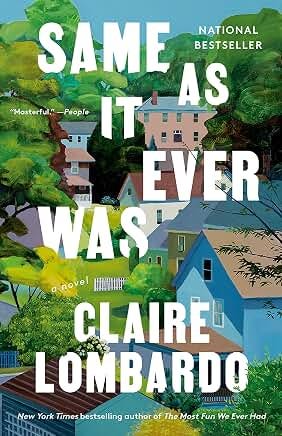
The pain of not fitting sends people in different directions. Mark is quietly nice to everyone himself. Julia tends toward embattled: She had a tendency, she knew, to turn people into her enemies before they’d actually had a chance to wrong her… She braces herself for attacks that never come and can’t help unending her marriage.
Extreme misfits go rogue; they may become dangerous—Unabombers and serial killers. They may also be leaders, pathfinders, experimenters and inventors of new possibilities, prophets, spiritual leaders, artists.
The problem with deviating is how it points to a larger problem so entrenched it escapes observation, the limitations of being “normal.” Pressure to bend to another’s will or a cultural norm engenders a conviction that one is not okay otherwise. The consequences are unpredictable, possibly dangerous, definitely painful, occasionally a gift.
These are the parameters embedded in fiction. Is there a revered novel that lacks a misfit?
Beverly Burch’s most recent book is the novel, What You Don’t Know. She also has four award-winning poetry collections and two nonfiction books. She lives in Oakland, CA. Website: www.beverlyburch.com
Purchase WHAT YOU DON’T KNOW here.

Thanks for reading. And your own thoughts?
I love a good etymology search. Good post. xx