
Losing a Life, Saving a Life
The mulitple truths of suicide

For all the decades I practiced psychotherapy, one fear never left me: one of my patients would die by suicide. That threat and that feeling of responsibility hangs over most therapist’s work, and though I spent years with patients who were pulled toward suicide I was fortunate that none succumbed to that pull. If someone is determined, however, nothing will finally stop them.
The aftermath of an act of suicide falls outside ordinary grief—but is any grief ordinary? Those left in its wake have more than loss to deal with. Suicide leaves terrible residue: how could you? how did I not know? what about the people who love you?
It’s a word with an unusual history. It looks like pure Latin, unevolved through other tongues, i.e., sui= self, cide=to slay, but the word never existed in Latin. In 1643, Sir Thomas Browne’s Religio Medici created the word. (Previously “self-slaughter” or “voluntary death” were used). “Suicide” was incorporated back into Latin (or New Latin), a rare instance of Latin acquiring a later word from later languages.
Three memoirs of surviving a loved one’s suicide recently landed on my reading list; each is written with great courage, great feeling, great vulnerability, but they approach the aftermath of unthinkable loss in radically different ways.
Samantha Rose’s Giving Up the Ghost is the story of her own survival after her mother’s shocking leap from Bodega Head. A ghostwriter, Rose’s title has a double meaning: she’s no longer writing other people’s stories, she’s writing her own. Her mother, with whom she was very close, seems like the least likely person to take her own life—a beloved local figure, a successful writer, a woman with close family ties—but she does so three months after her husband dies from a prolonged struggle with cancer.
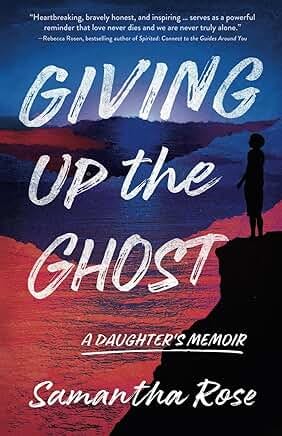
Rose takes us through the moments, days, years afterwards, as she struggles to find some footing for herself. People speak of healing, but she writes: the beating pulse of loss doesn’t go away. It fades, goes quiet at times, but it doesn’t stop. The missing of someone continues, and the missing is hard and long, a daily reminder that there are some sorrows we have to live with….I don’t want the scars to heal, not completely.
Raising her son, continuing to speak with her mother, a form of therapy, her own desire to live—these allow her to find a path out of overwhelming grief, anger and despair during the isolation of the Covid lockdown.
Miriam Toews lost both her father and her sister to suicide. A Truce That Is Not Peace is a jagged, beautiful memoir that mirrors the disorientation of mind caused by suicide in its own disjointed structure and loose narrative. The inexplicability of the act and the acceptance of it haunt her and us.
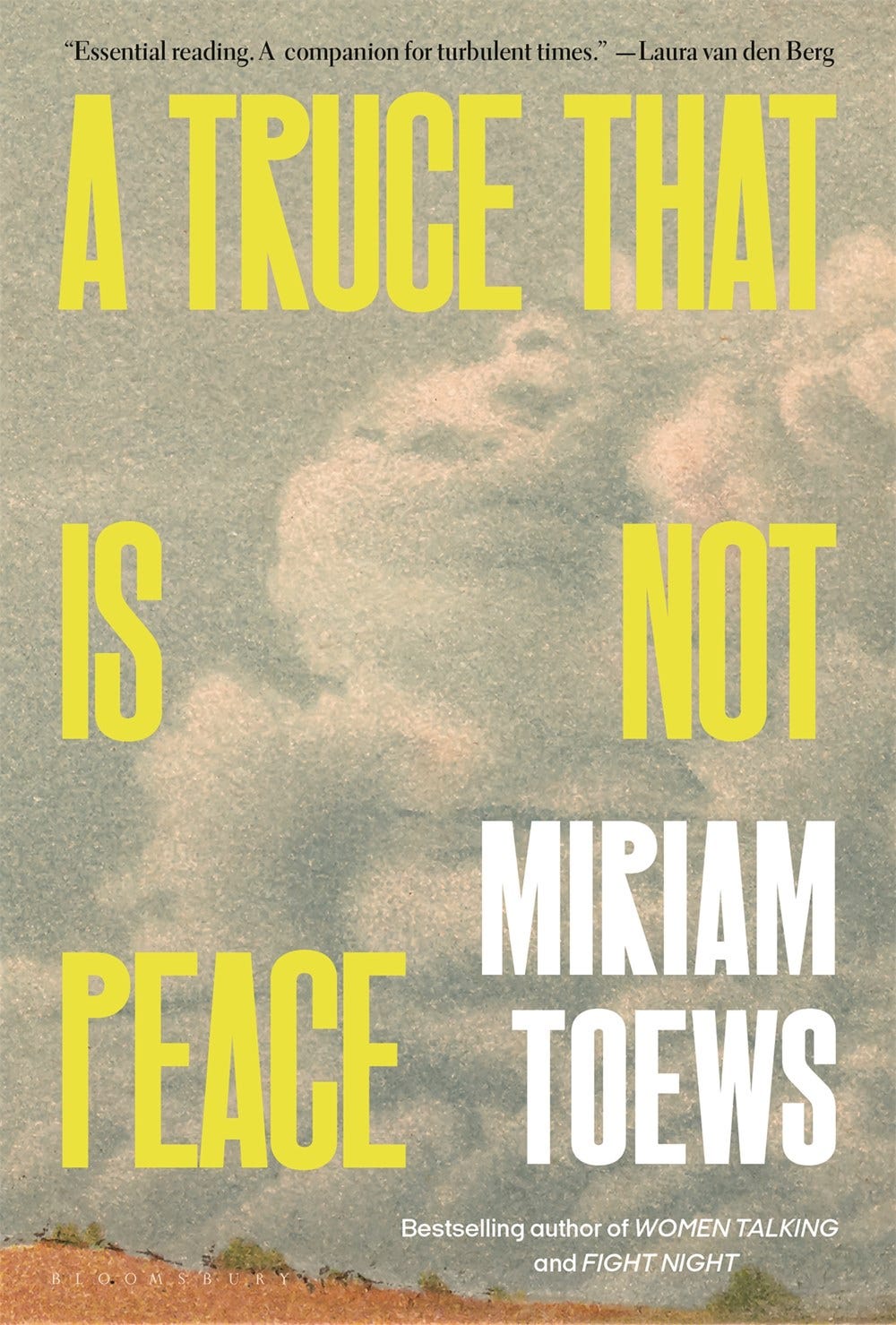
In adolescence her sister stopped speaking. Toews asks complex questions about her sister’s long silence: Had her suffering destroyed her language, or faith in language, and left her unable or unwilling to speak? Or was her silence a creative choice, an act of creation, an effort? Or was it language, or its futility, its shortcomings, that destroyed her first.
She asks the same about both suicides: Why did they do it, my father and my sister? …to stop themselves from moving further and further away from the truth… or to escape the truth?
This sense that there is some kind of truth, some effort to save the self as well as destroy it, exists in all three memoirs. I’ve heard this from patients. Something has gone wrong with the self, something is distorting the self and only suicide will preserve the true self.
YiYun Li’s stunning Things in Nature Merely Grow, winner of this year’s Pulitzer, is a testament more than a memoir, written from the abyss (her word) of her two sons’ suicides, six years apart. Both boys were exceptionally brilliant, yet the world was not for them. One bore too much suffering; the other, who learned multiple languages on his own and read philosophical tomes at six, rarely spoke in any language.
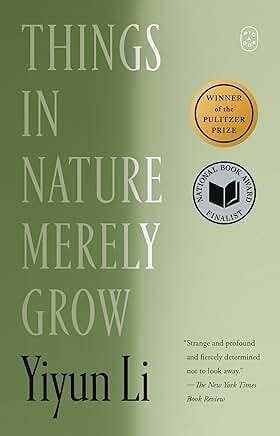
Li expects no healing. She practices radical acceptance, having attempted to kill herself years before because she believed a dead mother was better for her sons than a mad mother. (Her own mother was mad and abused her physically and verbally). She never flinches in her unwillingness to accept solace that feels false. She will live in the abyss, in the “now and now and now” that is her and her husband’s life. Love for her sons is palpable, the loss unbearable, yet it must be borne.
There is no rush, as I will have every single day, for the rest of my life, to think about Vincent and James, outside time, outside the many activities of everyday life. And this, among other reasons, is why I am against the word “grief,” which in contemporary culture seems to indicate a process that has an end point: the sooner you get there, the sooner you prove yourself to be a good sport at living…
The fact is, there is no word for this state I’ve found myself in, in which lucidity and opacity are one and the same. But the fact of their deaths remains and her task is to live its reality, find its meaning, accept her sons’ choices as, again, a kind of preservation of themselves.
Writing this book is a way to separate myself from that strange realm while simultaneously settling myself permanently into that realm. Without this, she would be thrown into a worse kind of abyss: Children die, and parents go on living in an abyss, but that, I now know, is not the worst thing. Beyond that abyss is yet another abyss, and one has to rely on one’s thinking to stay in the more meaningful abyss.
She goes on living in order to go on loving her sons. I can’t recall any book that holds such courage in facing what everyone wants to turn away from.
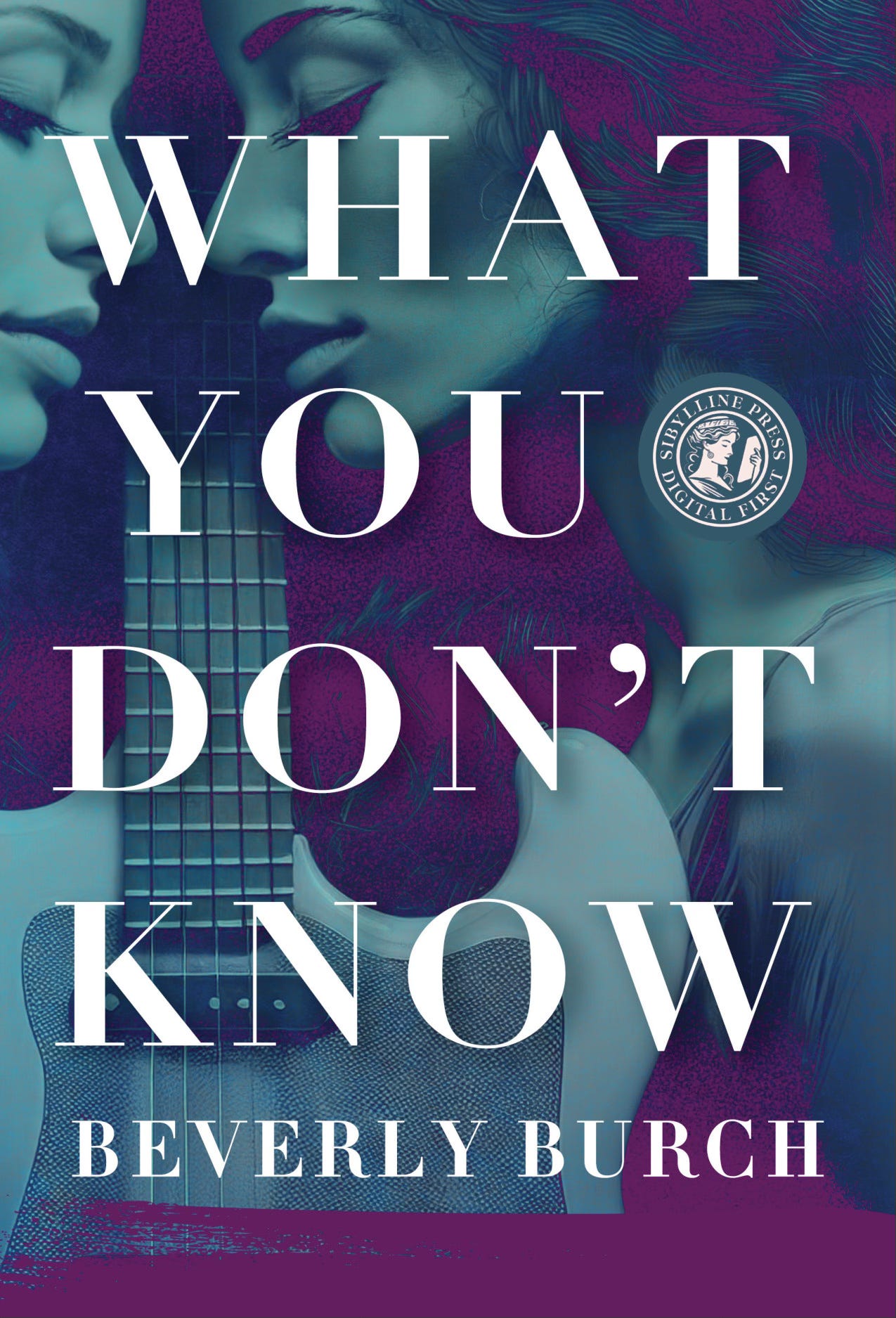
Beverly Burch’s most recent book is the novel, What You Don’t Know. She also has four award-winning poetry collections and two nonfiction books. She lives in Oakland, CA. Website: www.beverlyburch.com
Purchase WHAT YOU DON’T KNOW here.
Thanks for reading. And your own thoughts?
I saved this post to read when I had time to really read it. Thank you for seeing and hearing those who have experienced this loss (and those who have struggled with SI). As the mother (stepmother who raised him) of a self-slaying son, these all carry meaningful perspectives for me. Thank you. xx
I appreciate both the form and content of this essay. I have read these books, and of the three I appreciated Yiyun Li's the best, as the brilliant accomplishment it is, to both survive and to bear witness without sentimentality. In my experience, too often memoirs about suicides are overtaken with feelings of guilt and responsibility, as well as a preoccupation with missing. My sister was chronically suicidal over decades and finally succeeded. I feel compelled to say I offered her compassion over many years, but I also felt relieved, rageful, and released when she died. The impact of chronic suicidal attempts over many years, and the effect upon others of her desperate manipulations and ultimate death, felt profoundly hostile. I find that accounts of suicide are preoccupied with "what should I have done", guilt, and loss. There is little discussion of relief and appreciation of the other's right to die.