
Bushwhacking
The wildness of creation

Writing a first draft is pure creative angst as you find your way through an unknown wilderness. Possibilities glimmer on the horizon that prove to be false summits. Hard work. Unsettling, even alarming, because you don’t know where you’re going and you’re quite possibly going nowhere.
Rewriting is a different creative process, one with less angst: a re-vision of the project. Retracing the path you clear brush, remove rocks, spot an alternate, more intriguing trail. It’s easier to see where you’re going.
I also spend a lot of time off the page, wandering the wilderness of the mind, to discover a way.
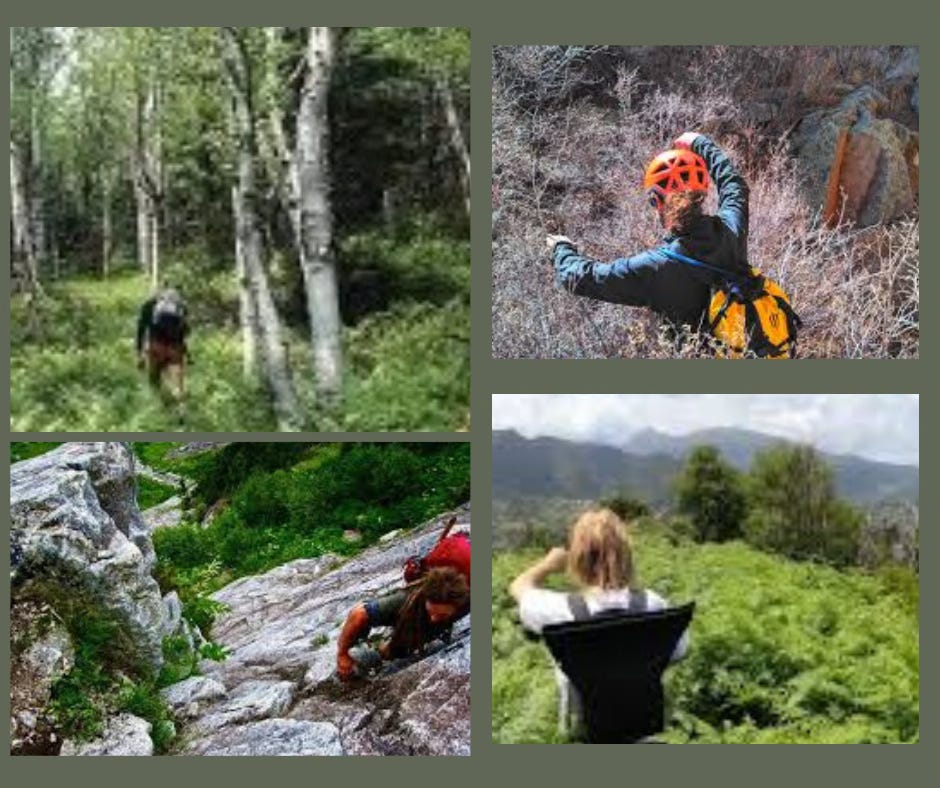
It’s said there are two types of writers: planners and pantsers. Planners map out a story before they begin to write a draft. They plot the direction, even make a detailed outline or sketch out scenes beforehand. A fairly conscious project, it seems to me, not being a planner or plotter myself.
Pantsers, as in seat-of-the-pants writers, are my people. If planned from the beginning, my story is a half-dead fish lying flat on the page. Meticulous planning isn’t my strong suit anyway. I only know where I’m going as the plot emerges. Same with characters: I know them until they surprise me, grow in complexity, reveal more of who they are, the way real people do.
Often an extra hour in bed, roaming that liminal half-awake morning space, an idea or scene will come through. It doesn’t look like work to anyone, but it’s the work. Or part of the work. On a walk, making dinner, reading another book, i.e., writing happens away from the page as it takes shape.
Bushwhack is a lovely word; it is what it says it is. Whack comes from thwack and you almost hear the bushes being knocked aside. You spot a natural path or one with fewer obstacles, obstacles you can remove. Something catches your eye off trail; a peevish voice says what a crazy idea, but you head toward it. If it’s bad move, it is. You toss it the next day. If it’s good, it gives life to the story.
A lot of what you write is less than good, so you cull. Like the profligate photographer who takes twenty shots to get one desired image. Like Edison who, according to legend, found 999 ways not to invent a light bulb before he found the right way. A scout who zigzags back and forth until a pass appears between the ridges.
Playing with images, sounds, diction, and a meandering story leads to frustration and disappointment, and if lucky, a few eureka moments. Sometimes a drawer full of bad writing is necessary to reach the good, though scenes that don’t make it into the final work will speak their displeasure.
Annie Dillard laid out her process in a 1989 book, The Writing Life. You can hardly call it a path: I do not so much write a book as sit up with it, as with a dying friend. During visiting hours, I enter its room with dread and sympathy for its many disorders. I hold its hand and hope it will get better.
Her chiseled sentences are the work of hours, days, weeks. The truly excruciating part is tossing out what she first thought was the best: You must demolish the work and start over. You can save some of the sentences, like bricks. It will be a miracle if you can save some of the paragraphs, no matter how excellent in themselves or hard-won. You can waste a year worrying about it, or you can get it over with now.
Bewilderment and persistence. She compares writing to splitting wood on a chopping block, mining, even alligator wrestling. She’s a jeweler with a hammer, and though she dislikes the romanticism of it, a visionary.
To write she isolates herself: One wants a room with no view, so imagination can meet memory in the dark. She draws images, doodles, cleans or repairs her study, distracts herself. The work yawns and waits in the dark. Dillard is a stylist and a thinker with an exploratory mind, fascinated by the natural world. She interrogates suffering through religion, philosophy and literature.
Lily King, an author of strong fiction, centered one novel on a would-be writer, Writers and Lovers. Casey is heartbroken, mourning the recent loss of her mother, wounded from a bad love affair, and struggling with a novel she’s worked on for years. Her work is not going well: I'd had a few bad days of writing, and I was tempted to go back a chapter to fix it, but I could not. I just needed to move forward, get to the end. Painters, I told myself, though I know nothing about painting, don't start at one side of the canvas and work meticulously across to the other side. They create an underpainting, a base of shape, of light and dark. They find the composition slowly, layer after layer. This was only my first layer, I told myself…It's okay that it feels like a liquid not a solid, a vast spreading goo I can't manage, I told myself. It's okay that I'm not sure what's next, that it might be something unexpected.
The mental state necessary for writing is not that of daily life: The hardest thing about writing is getting in every day, breaking through the membrane. The second-hardest thing is getting out. Sometimes I sink down too deep and come up too fast. Afterward I feel wide open and skinless.
Sinking into the work does feel risky; younger, I stopped writing fiction for a while because I feared I’d disappear into the work and never come back. What does that even mean?
Current political troubles stay on my mind. Error and success mark how we resist Trump’s mania: we’re bushwhacking. We fight what’s coming down without a clear direction. Missteps, discoveries, stabs in the dark, there’s no other way when you lack a map. Successes accumulate. So do failures. But red seats turn blue, town halls reveal the nakedness of the emperor, courts overrule him, and many states flex their muscles. Demonstrations grow. We have a broad swathe of allies. I believe in this path.
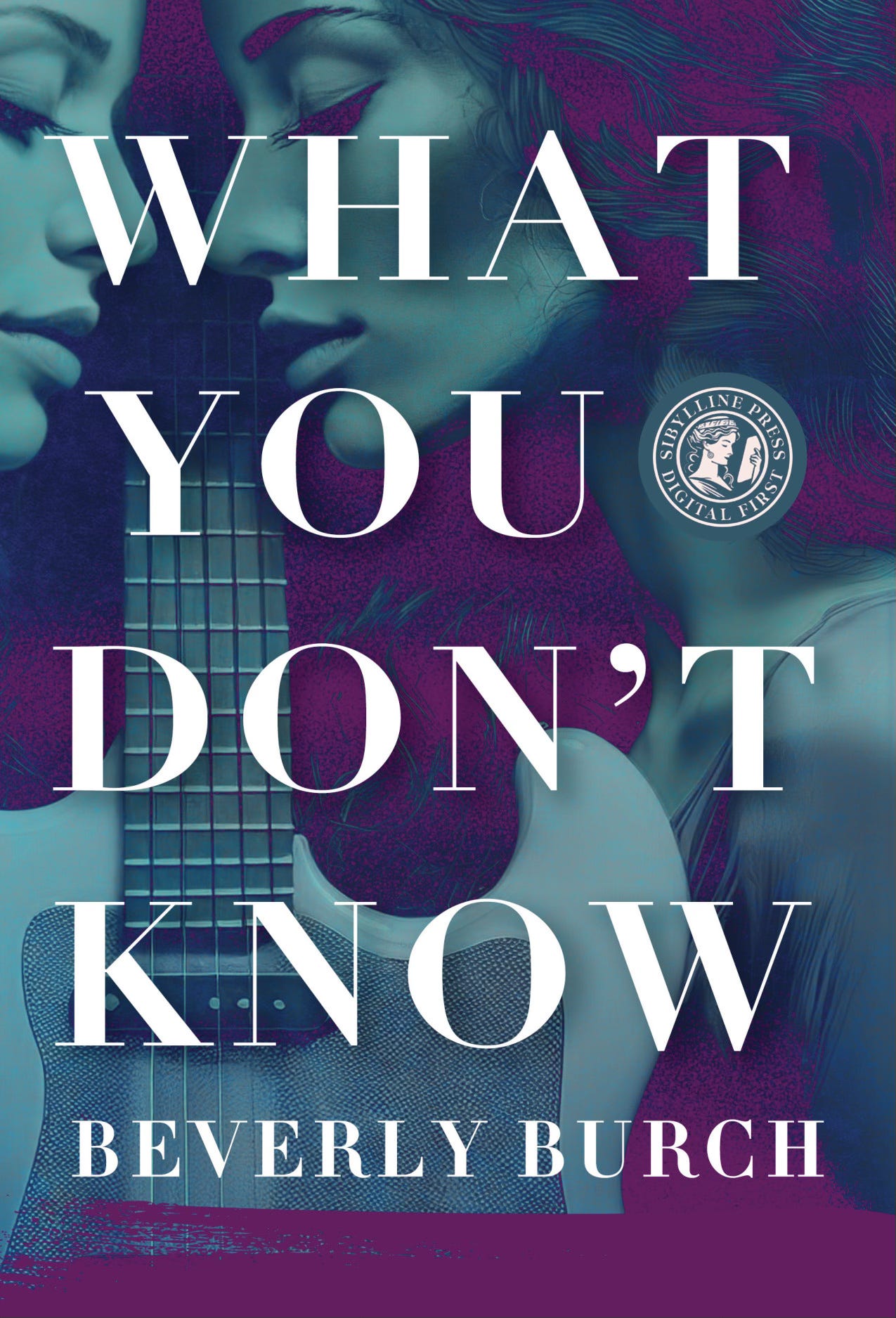
Purchase WHAT YOU DON’T KNOW here.
Hi, Beverly. I love the idea of sitting with my writing as if I am sitting with a dying friend. It can be hard, but it feels right to be there, and the situation calls for honesty delivered with kindness and forgiveness, useful guidelines while reviewing the words that have come through my fingertips, before turning to whacking back the shrubbery of unnecessarey repetitions and muddled digressions.
Hi Beverly,
I enjoyed this. I'm a pantser too!
Megan